Heavy Duty Power Tools
The Foundation: The Cabinet Saw
The centerpiece of any serious woodworking shop is the table saw. Moving from a lightweight jobsite saw to a 3HP cast-iron cabinet saw is a revelation in stability, safety, and cut quality. However, this upgrade introduces significant infrastructural demands.
| Feature | Jobsite Saw | Contractor Saw | 3HP Cabinet Saw |
|---|---|---|---|
| Weight | 40-70 lbs | 150-250 lbs | 400-600+ lbs |
| Power Requirement | 120V / 15A | 120V / 15A-20A | 240V / 20A Dedicated |
| Trunnion Mount | Table mounted | Table mounted | Cabinet mounted (superior alignment) |
Industrial Dust Collection
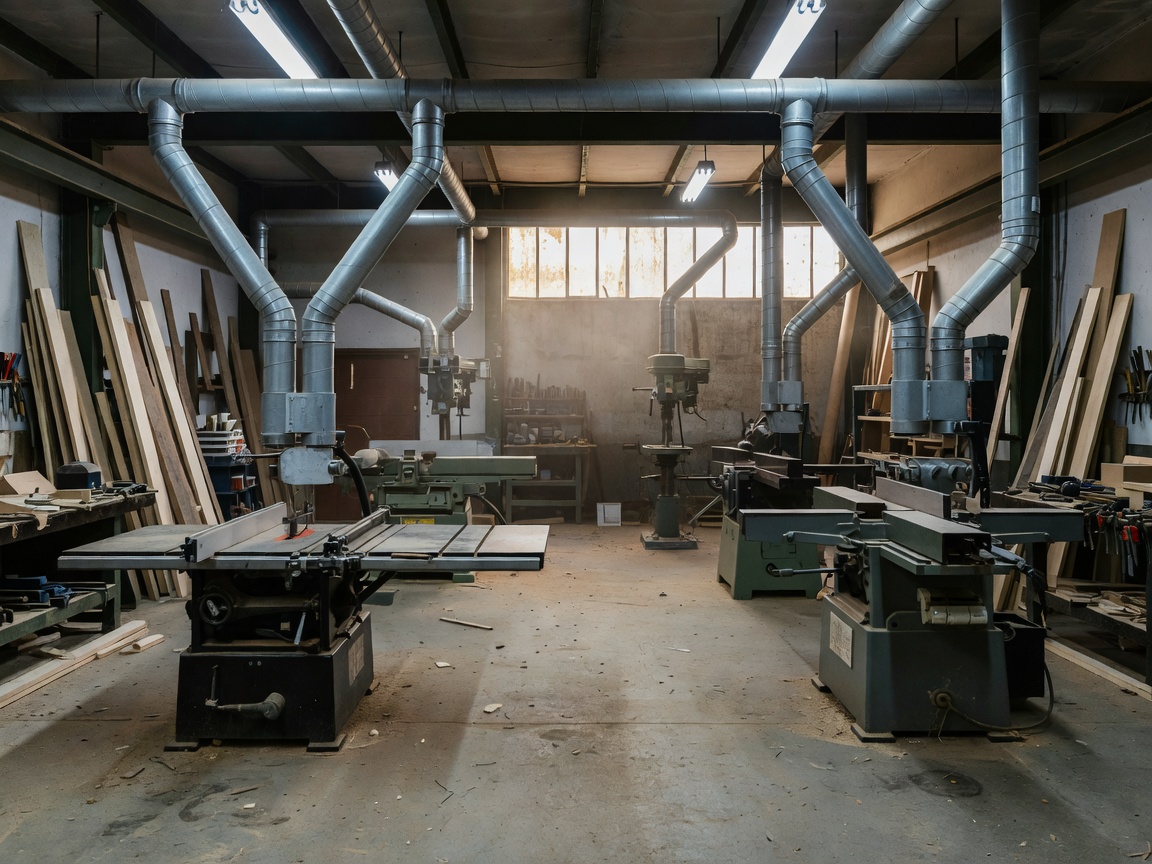
A shop vacuum is insufficient for stationary machinery. True commercial dust collection relies on high CFM (Cubic Feet per Minute) and cyclonic separation to capture dangerous fine particulate (PM2.5) before it reaches the filter.
Why Go Commercial Cyclone?
- Air Quality: Captures 99.9% of dust down to 1 micron, protecting respiratory health.
- Sustained Suction: Cyclones prevent filter clogging, maintaining CFM over long runs.
- Tool Longevity: Removing chips from cutterheads prolongs blade life and prevents burning.
Residential Installation Hurdles
- Height Clearance: True cyclones often exceed 8 feet, challenging standard garage ceilings.
- Noise Levels: Large impellers generate significant low-frequency noise.
- Ducting Layout: Requires rigid metal ducting with sweeping curves, complicating overhead space.
Powering the Shop
Before purchasing heavy machinery, a panel upgrade is usually mandatory. Commercial tools almost exclusively run on 220V/240V single-phase, or even 3-phase power (requiring a Rotary Phase Converter or VFD in a home setting).